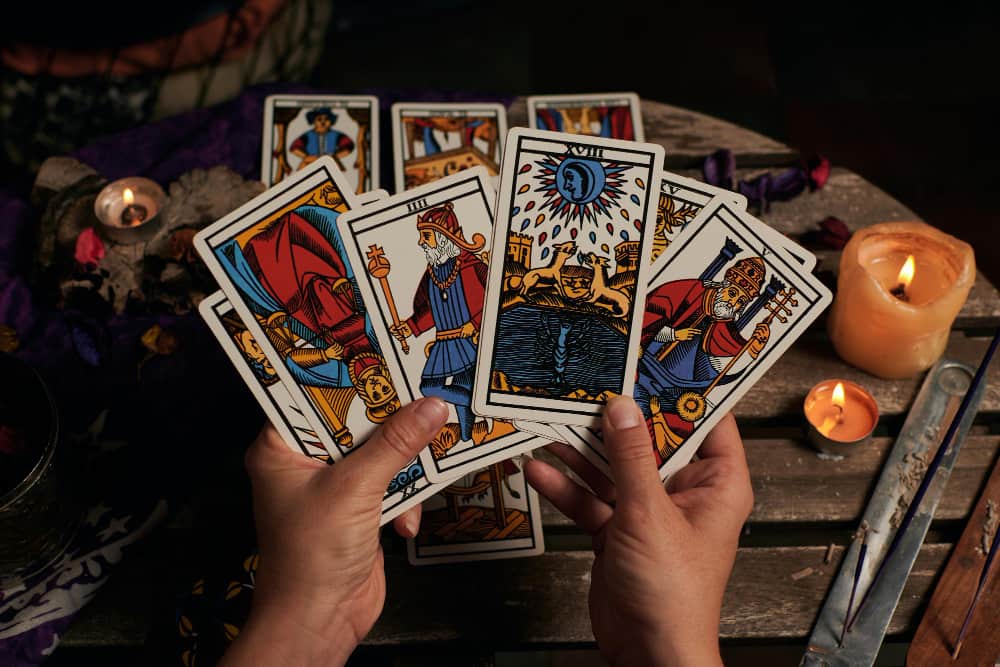
Discover how tarot and cartomancy can support parent-child communication, ease anxiety, and encourage a positive future. Learn practical techniques, including the Celtic Cross spread, to better understand your child’s emotions and create a harmonious family environment.
Introduction
Understanding the Challenges of Modern Parenting
In today’s fast-paced world, many parents feel overwhelmed when trying to understand their children’s emotions and guide them toward a positive future. Between school pressure, social influences, and emotional development, children often experience feelings they struggle to express clearly. This can lead to misunderstandings, tension, and sometimes even anxiety within the family unit.
For many mothers, the desire to protect, guide, and reassure their children is deeply rooted — yet difficult moments can create doubts: “Am I doing enough?” or “How can I better support my child?” These questions are not only natural, but also essential in building a strong emotional connection.
Cartomancy as a Gentle and Reflective Tool
Cartomancy, when used with intention and kindness, is not about predicting a fixed destiny, but about opening a space for understanding, reflection, and emotional clarity. Tarot cards and other divinatory tools offer symbolic language that can help both parents and children explore feelings that are often hidden beneath the surface.
Rather than imposing answers, the cards invite dialogue. They act like mirrors, reflecting inner experiences and offering new perspectives. This approach aligns closely with personal development and conscious parenting, where listening and empathy are key.
What This Article Will Explore
- How cartomancy can help parents better understand their children’s emotional world
- The role of tarot in improving communication within the family
- How structured spreads like the Celtic Cross can provide clarity in complex situations
- Ways to ease parental worries while encouraging a hopeful vision of the future
Whether you are new to tarot or simply curious, this article will guide you through a reassuring and practical approach to using cartomancy as a supportive tool in your parenting journey.
Chapter 1: Cartomancy as a Tool for Understanding Children’s Emotions
Accessing the Emotional World Through Symbols
Children often express their inner world through emotions rather than words, making it essential for parents to find alternative ways to understand them. Unlike adults, children may struggle to clearly articulate fear, frustration, or confusion. This is where cartomancy, and especially tarot, becomes a valuable support tool.
The symbolic nature of tarot cards allows emotions to be represented visually and intuitively. Images, archetypes, and colors speak directly to the subconscious, helping parents interpret what might otherwise remain hidden. For example, a card like the Moon may reflect anxiety or uncertainty, while the Sun can symbolize joy, confidence, or a need for reassurance.
Identifying Emotional Blockages and Needs
Tarot does not impose answers but gently reveals emotional patterns that can guide parents toward deeper understanding and empathy. By observing the cards drawn, parents can begin to recognize recurring themes such as insecurity, need for attention, or emotional withdrawal.
- Detect hidden fears or anxieties in a child
- Understand behavioral changes through emotional insight
- Identify unmet emotional needs
- Encourage a more compassionate parental response
This approach shifts the focus away from judgment and toward curiosity. Instead of asking “What is wrong?”, parents begin to explore “What is my child feeling?” This subtle change can have a profound impact on the parent-child relationship.
Creating a Safe Space for Emotional Expression
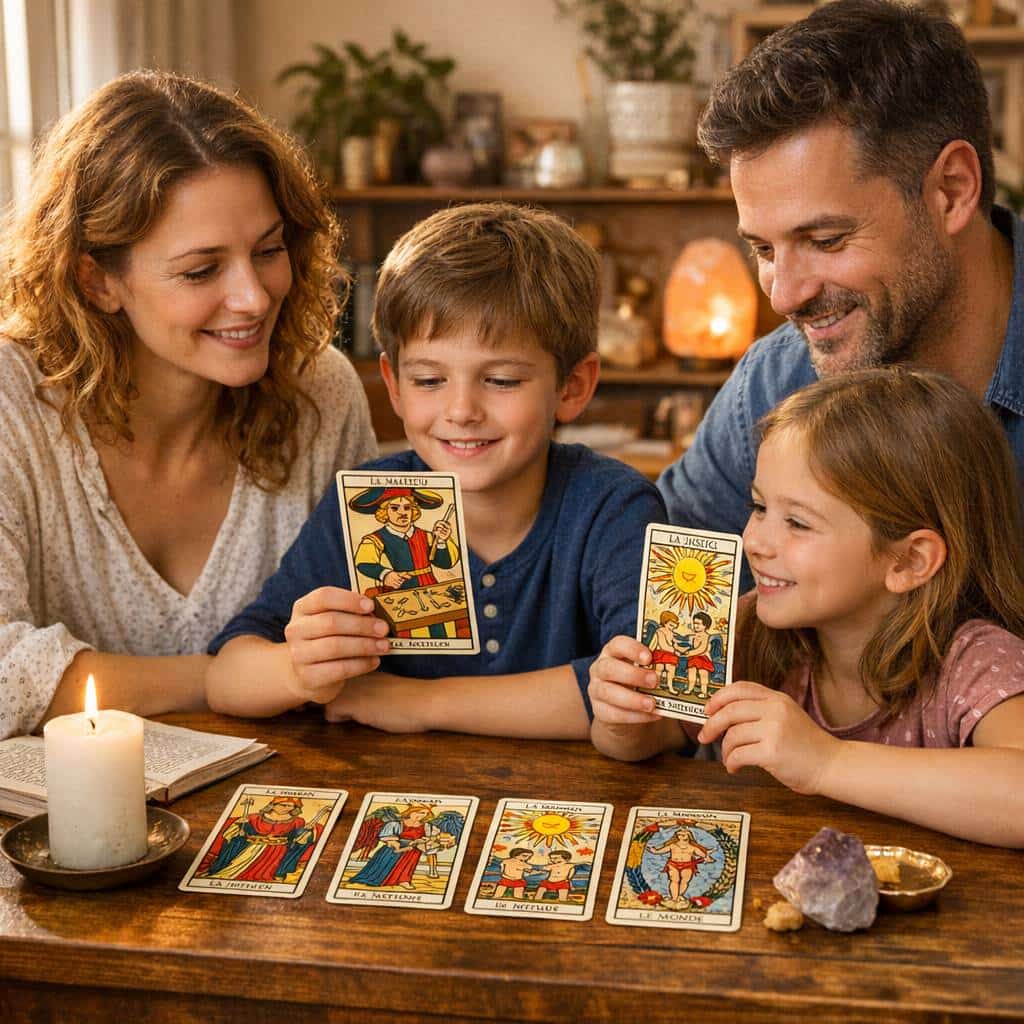
Using tarot as a reflective tool creates a calm and safe environment where emotions can be acknowledged without pressure. It is not necessary for the child to directly participate in the reading the parent can use the insights obtained to adapt their behavior, communication, and support.
Ultimately, cartomancy becomes a bridge between the visible and invisible aspects of a child’s experience, helping parents nurture emotional intelligence and strengthen the bond of trust within the family.
Chapter 2: Improving Parent-Child Communication Through Tarot
Using Tarot as a Gentle Communication Bridge
Open and honest communication is the foundation of a healthy parent-child relationship, yet it can sometimes feel difficult to achieve. Misunderstandings, unspoken emotions, or simple daily stress can create distance between parents and their children. Tarot, when used thoughtfully, can serve as a gentle bridge to reconnect and facilitate meaningful conversations.
Rather than directly questioning a child, which can sometimes feel intrusive or overwhelming, tarot introduces a softer approach. The cards act as a neutral support, allowing discussions to emerge naturally. A simple question like “What energy surrounds our relationship today?” can open dialogue in a non-confrontational way.
Encouraging Dialogue Without Pressure
Tarot creates a safe and symbolic space where both parent and child can express thoughts and feelings without fear of judgment. This is particularly helpful for children who are shy, sensitive, or not yet comfortable verbalizing their emotions.
- Ask open-ended and supportive questions
- Use simple language adapted to the child’s age
- Encourage sharing without forcing answers
- Focus on listening rather than correcting immediately
For example, instead of asking “Why are you upset?”, a parent might explore “What does this card tell us about how you’re feeling today?” This reframing allows the child to project emotions onto the card, making it easier to talk.
Strengthening Emotional Bonds Through Shared Moments
Integrating tarot into family life can also create special moments of connection. These moments are not about divination in a strict sense, but about spending quality time together and building trust.
By regularly creating a calm, respectful space for exchange, parents show their children that their emotions matter and are worthy of attention. Over time, this practice strengthens emotional bonds and promotes a more harmonious family dynamic.
Ultimately, tarot becomes not just a tool for insight, but a meaningful way to nurture communication, empathy, and mutual understanding within the family.
Chapter 3: The Celtic Cross Spread to Understand Family Dynamics
A Structured Method for Clarity and Insight
The Celtic Cross spread is one of the most powerful tarot techniques to explore complex family situations with depth and balance. Its structured layout allows parents to step back from emotional reactions and gain a clearer understanding of what is truly happening within the parent-child relationship.
This spread is particularly useful when facing recurring tensions, misunderstandings, or concerns about a child’s development. Rather than providing fixed answers, it offers a comprehensive view of influences, challenges, and possibilities.
Adapting the Celtic Cross to Parenting Questions
When used with a caring intention, the Celtic Cross becomes a tool for guidance, helping parents take thoughtful and constructive actions. Each position in the spread can be interpreted in a way that focuses on the child’s well-being and the family dynamic.
- The current situation: understanding the child’s present emotional state
- The challenge: identifying obstacles or tensions within the relationship
- The unconscious influences: hidden fears or patterns affecting behavior
- The advice: guidance for the parent’s attitude or actions
- The potential outcome: a possible evolution based on current energies
This structured reading helps parents shift away from uncertainty and toward clarity, making it easier to respond with empathy and wisdom.
Encouraging Reflection Instead of Fear
The Celtic Cross is not meant to predict a fixed future, especially when it comes to children. Instead, it highlights tendencies and opportunities for growth. This distinction is essential, as it prevents unnecessary worry and promotes a more empowering perspective.
By using this spread, parents learn to interpret situations with nuance, recognizing that every challenge is also an opportunity to strengthen the relationship. It encourages patience, self-awareness, and a deeper connection to both the child’s needs and the parent’s own role.
Ultimately, the Celtic Cross becomes a valuable ally in navigating family life, offering guidance that is both insightful and reassuring.
Chapter 4: Reassuring Parents and Encouraging a Positive Vision of the Future
Letting Go of Fear and Building Confidence
One of the greatest challenges in parenting is managing the constant चिंता about a child’s future and well-being. It is natural for parents to wonder if their child will succeed, feel happy, or overcome difficulties. However, this चिंता can sometimes create unnecessary stress and interfere with the ability to stay present and supportive.
Cartomancy offers a different perspective. Instead of focusing on fear or worst-case scenarios, tarot invites parents to shift toward awareness and trust. The cards do not dictate a fixed future — they highlight possibilities, tendencies, and opportunities for positive growth.
Seeing Possibilities Instead of Fixed Outcomes
Tarot encourages a flexible and hopeful vision of the future, where every situation can evolve through conscious choices and loving guidance. This mindset is especially important when thinking about children, whose paths are constantly unfolding.
- Understand that challenges are part of growth
- Focus on strengths rather than weaknesses
- Recognize positive potentials highlighted by the cards
- Encourage optimism and resilience within the family
For instance, a card that may initially seem difficult can be interpreted as a learning opportunity rather than a negative prediction. This reframing helps parents remain calm and constructive in their approach.
Using Tarot as a Tool for Emotional Reassurance
Beyond guidance, tarot can also bring a sense of emotional comfort. It helps parents feel less alone in their reflections, offering a symbolic framework to process concerns and gain perspective.
By engaging with the cards regularly, parents can develop greater confidence in their intuition and decision-making. This inner reassurance naturally impacts the child, who benefits from a more stable, calm, and supportive environment.
Ultimately, cartomancy becomes a source of empowerment. It allows parents to move from fear to trust, from doubt to clarity, and to embrace their role with greater peace of mind and optimism for their child’s future.
Conclusion
Bringing Meaning and Connection into Family Life
Cartomancy, when approached with care and intention, becomes far more than a divinatory practice—it turns into a meaningful tool for connection, understanding, and emotional growth within the family. Throughout this article, we have seen how tarot can help parents better understand their children’s emotions, improve communication, and navigate challenges with greater clarity and calm.
Rather than predicting a fixed future, the cards offer a supportive framework that encourages reflection and mindful action. This approach is especially valuable in parenting, where adaptability, empathy, and trust play a central role in a child’s development.
A Supportive Companion, Not a Substitute
It is essential to remember that tarot does not replace parental responsibility, but gently supports it by offering insight and perspective. The true strength of this practice lies in how it helps parents reconnect with their intuition and approach difficult situations with greater awareness.
- Use tarot as a guide, not a decision-maker
- Remain attentive to the child’s real-life needs and emotions
- Encourage open dialogue and empathy above all
- Adopt a positive and flexible mindset about the future
By integrating cartomancy into a broader journey of personal development and conscious parenting, families can cultivate stronger emotional bonds and a more harmonious environment.
In the end, the true purpose of tarot in this context is simple: to help parents feel reassured, children feel understood, and the entire family move forward with confidence, love, and a shared sense of growth.
To deepen your understanding of symbolic meanings, you can explore this helpful guide on the meaning of the 78 divinatory tarot cards, which offers clear and accessible interpretations.